
One Option for a Missing Tooth
Dental Implant Care in Orlando, FL
A missing tooth can change how you chew, how nearby teeth share pressure, and how comfortable you feel when you smile. A dental implant may support a replacement tooth in some situations, but the decision begins with your health, the space, and the condition of the surrounding area.

Illustrative stock photography.
Dr. Maxine Moncrieffe provides some implant treatment in Orlando. An evaluation will show which parts of care can be completed in the office and whether another provider should be involved.
What to Know
What a Dental Implant Does
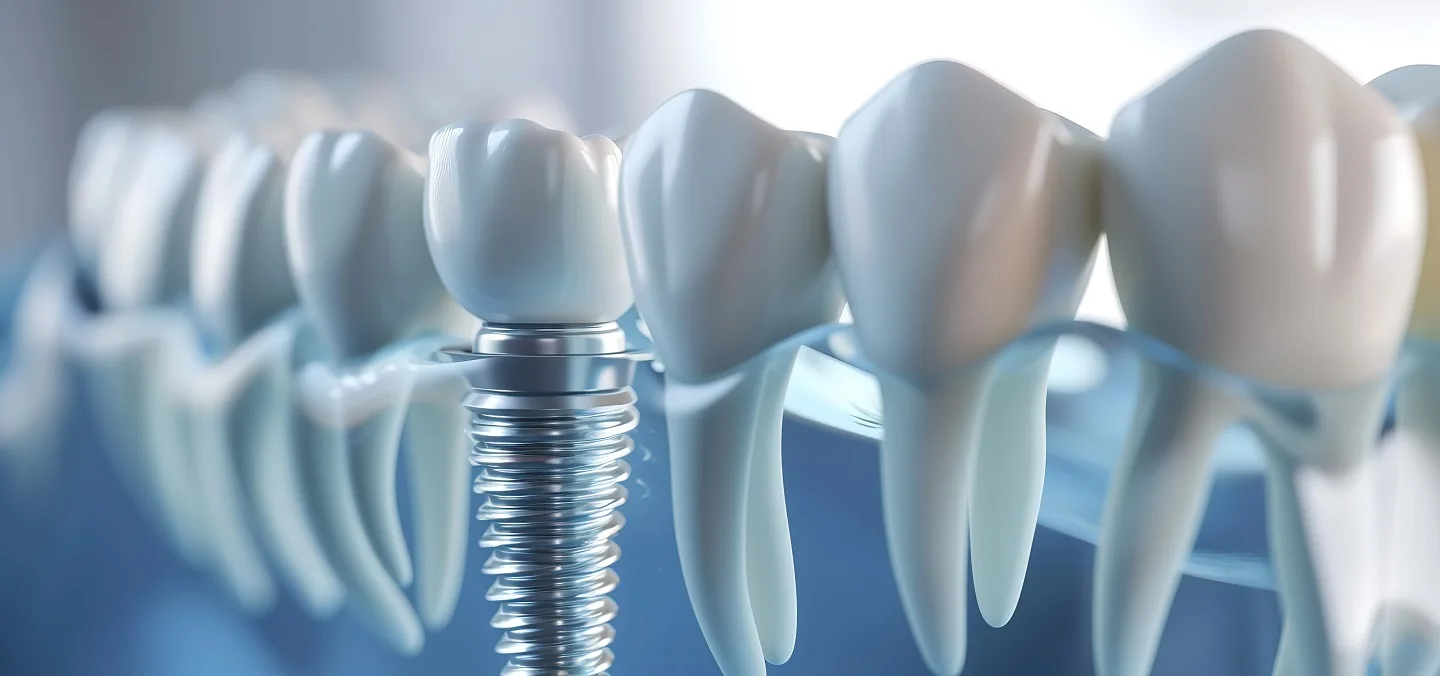
A dental implant is placed in the jaw to support a replacement tooth or another prosthetic design. The visible tooth and the implant that supports it are different parts of the treatment.
Implants are one way to replace missing teeth—not the only way. Depending on the number and location of missing teeth, your conversation may also include a bridge or denture. Each option uses different support and involves different care over time.
What to Know
Questions That Shape the Recommendation
Implant planning may consider:
- The number and location of missing teeth
- The health of the mouth and surrounding tissues
- The amount and condition of supporting bone
- The teeth next to the space
- The way your teeth meet when you bite
- Your health history and ability to heal
- Your priorities for function, appearance, timing, and upkeep
These factors require an individual evaluation. An online description cannot confirm candidacy.
What to Know
Implant, Bridge, or Denture?
Dental Implant
An implant can support a replacement without relying on neighboring teeth in the same way a traditional bridge does. Treatment may involve surgical and restorative steps over time. Ask which parts Dr. Moncrieffe provides and whether another provider would be involved.
Dental Bridge
A bridge can replace a gap using support from nearby teeth. It may avoid an implant procedure but requires evaluation of the supporting teeth and the way the bridge will function.
Denture
A partial or full denture can replace several teeth or a full arch. Removability, stability, comfort, and maintenance should be part of that conversation.
The right choice is the one that fits your mouth, health, priorities, and realistic ability to maintain it.
What to Know
What to Expect From Implant Planning
Start With the Missing Tooth or Failing Tooth
Tell Dr. Moncrieffe whether the tooth is already missing or may need extraction. If it is still present, ask whether it can be preserved and what extraction would mean for future replacement.
Evaluate the Area
The site and surrounding structures need to be assessed. Appropriate imaging may be needed to understand the available support and plan the next step.
Review the Treatment Sequence
Implant treatment may involve more than one phase. Ask what can be completed in this office, whether healing time may be involved, when the replacement tooth is planned, and who coordinates each part.
Discuss Maintenance
An implant-supported tooth still needs daily care and professional follow-up. Ask how to clean the area and what ongoing checks apply to the completed treatment.
What to Know
Keep Implant Treatment in Perspective
Implant treatment is one way to address certain missing-tooth needs. A bridge or denture may fit another situation better, so compare the purpose, steps, maintenance, and tradeoffs of each applicable option.
That broader view matters. Sometimes preserving a tooth is appropriate. Sometimes removal and replacement should be discussed. Sometimes a non-implant option better fits the situation. The recommendation should follow the condition—not a preference for one procedure.
What to Know
Replace Uncertainty With a Clear Comparison
If you are missing a tooth or have been told one may need removal, ask about the replacement options that apply to you. A useful consultation compares the choices without assuming that an implant is the answer for every space.
Common Questions
Frequently Asked Questions
Am I a Candidate for a Dental Implant?
Only an individual evaluation can answer that. The area, supporting structures, health history, and overall plan all matter.
Does Dr. Moncrieffe Complete Every Implant Procedure?
Dr. Moncrieffe provides some implant treatment, and most services are completed in the office. Ask which parts of your specific care can be completed here and whether another provider would be involved.
How Long Does Implant Treatment Take?
Timing depends on the condition of the site, the treatment steps, and healing. Confirm the expected sequence after a plan is developed.
Are Implants Permanent?
Avoid guarantees. Implant-supported restorations require care and can be affected by health, hygiene, forces, and other factors. Ask about realistic expectations and maintenance.
Is an Implant Better Than a Bridge?
Neither is automatically better for everyone. The health of neighboring teeth, the condition of the space, treatment steps, upkeep, and personal priorities all influence the decision.
How Much Does a Dental Implant Cost?
Cost depends on the treatment plan and the parts of care involved. Call the office to ask what current insurance and payment information applies.
A Clear Next Step
Talk With Dr. Moncrieffe About What You Need
Call with your questions or request an appointment online when you are ready.